 11

The Letitia James John Sarcone Dispute has attracted national attention because of the legal questions surrounding federal prosecutorial authority, political accountability, and the limits of government power. The controversy began after John Sarcone III, a federal prosecutor in New York, issued subpoenas targeting the office of Attorney General Letitia James in August 2025. The investigation examined whether James’s office had improperly pursued legal actions against Donald Trump and the National Rifle Association (NRA). However, James challenged the subpoenas, arguing that Sarcone lacked the legal authority to issue them. The courts eventually agreed with her challenge, creating a significant setback for the Justice Department. With appeals and further legal developments continuing in 2026, the dispute has become an important story in American politics and law.
| Category | Details |
| Main figures | Letitia James and John Sarcone III |
| Letitia James’s profession | Attorney and politician |
| Her position | New York Attorney General |
| John Sarcone’s profession | Federal prosecutor |
| Main controversy | Federal subpoenas and appointment authority |
| Subpoenas issued | August 2025 |
| Initial court ruling | January 2026 |
| Appeals court decision | August 2026 |
| Appeals court | U.S. Court of Appeals for the Second Circuit |
| Main legal issue | Federal Vacancies Reform Act |
| Latest major development | Supreme Court appeal |
| Case subject | Federal prosecutorial authority |
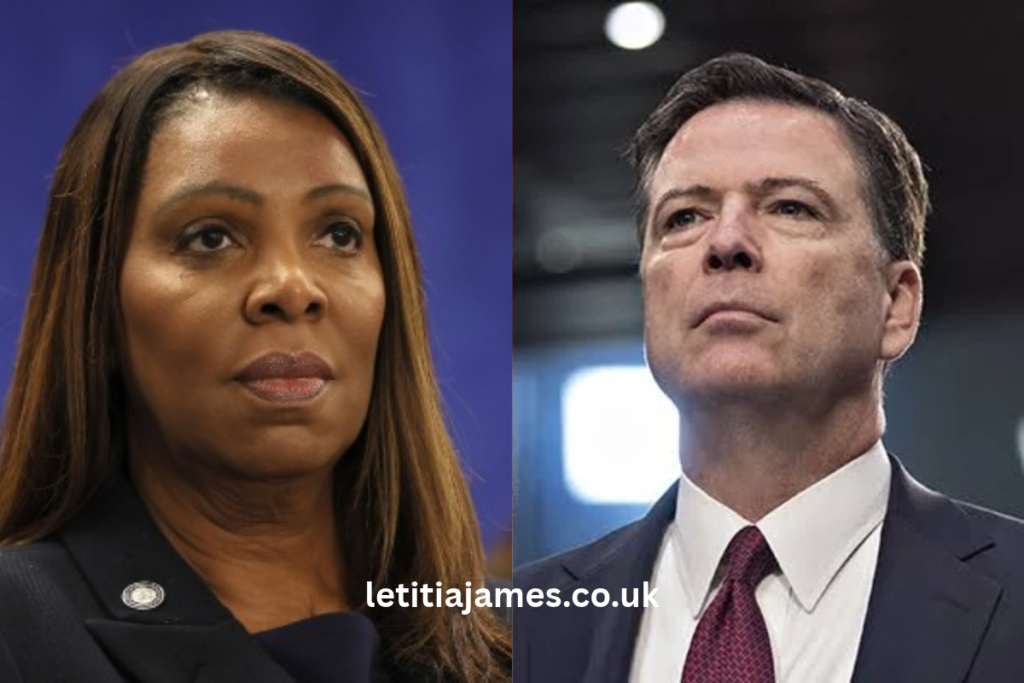
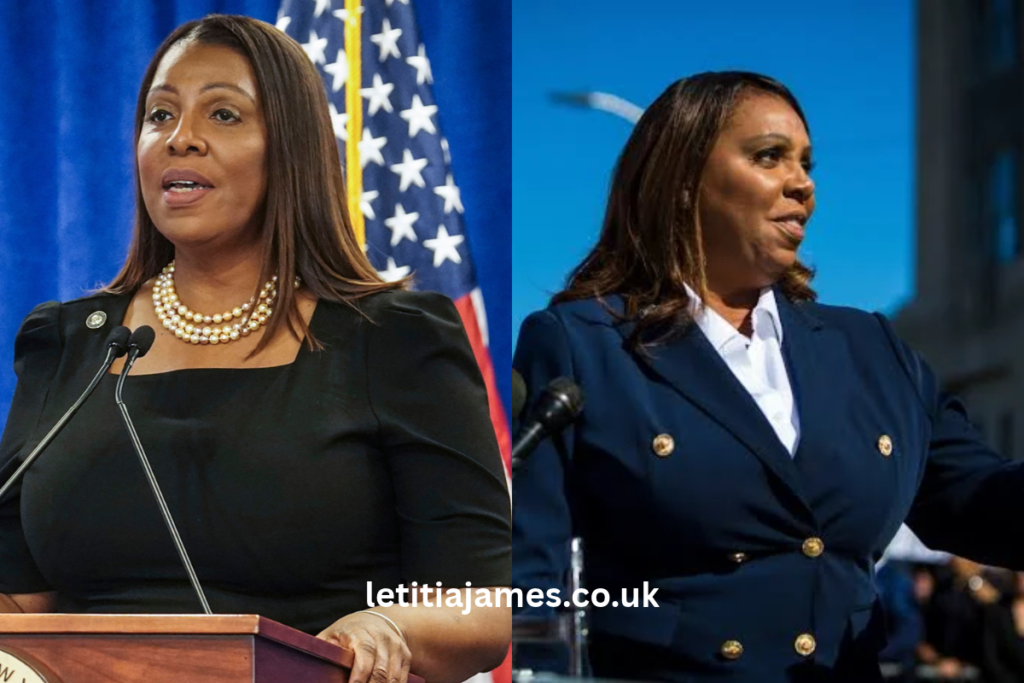
Letitia James is an American attorney and politician who serves as the Attorney General of New York. She became one of the most recognizable legal figures in the United States through her investigations and lawsuits involving powerful businesses and political figures.
Before becoming attorney general, James built her career in public service and New York politics. She served in several government positions, including as a New York City Council member and Public Advocate.
Her legal work brought national attention when her office pursued civil fraud litigation against Donald Trump and his business organization. She also became involved in legal proceedings concerning the National Rifle Association.
These high-profile cases made her a prominent figure in discussions about political accountability, corporate responsibility, and the independence of state law enforcement.
Letitia James was born on October 18, 1958, in Brooklyn, New York. She grew up in a large family and developed an interest in education, public service, and law.
She attended Lehman College, where she earned her undergraduate degree. Later, she studied law at Howard University School of Law in Washington, D.C., earning her law degree.
James also pursued a master’s degree in public administration at Columbia University’s School of International and Public Affairs.
Her educational background helped prepare her for a career involving legal practice, government administration, and public policy.
Before entering prominent political positions, she worked in different legal and public service roles. These experiences helped establish her reputation in New York’s political and legal environment.
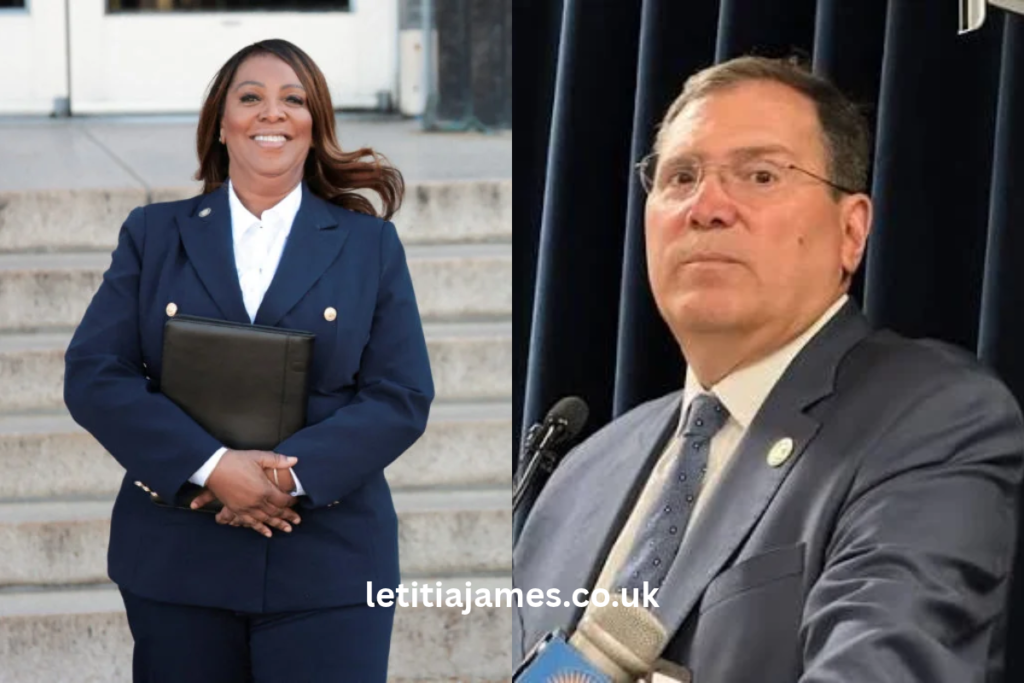
John Sarcone III is a former acting U.S. attorney for the Northern District of New York. His name became widely discussed after he issued federal subpoenas involving Letitia James’s office.
As a federal prosecutor, Sarcone was associated with investigations and legal matters within the Northern District of New York.
However, his appointment became the central issue in the dispute. James’s legal team argued that he was not lawfully serving as acting U.S. attorney when he authorized the subpoenas.
The disagreement eventually moved through the federal court system, where judges examined whether the administration had followed the legal requirements for temporary federal appointments.
The controversy began in August 2025 when Sarcone’s office issued two federal grand jury subpoenas to the New York Attorney General’s Office.
Federal investigators were examining whether James’s office had selectively prosecuted Donald Trump, his business interests, and the NRA.
The investigation raised questions about whether state enforcement actions had violated civil rights or involved improper political motivations.
James strongly challenged the federal investigation. She argued that the subpoenas represented political retaliation and were not issued by a prosecutor with valid legal authority.
Her legal challenge focused on the Federal Vacancies Reform Act, a federal law that establishes procedures for temporarily filling vacant government positions.
This legal argument eventually became more important than the original allegations being investigated.
In January 2026, a federal district judge ruled that Sarcone was not lawfully serving as acting U.S. attorney when he issued the subpoenas.
The court examined the administration’s attempts to extend his authority after his initial temporary appointment expired.
According to the ruling, the government could not avoid statutory appointment requirements simply by changing Sarcone’s official designation or assigning him responsibilities under another title.
The judge consequently quashed the subpoenas and barred Sarcone from continuing his involvement in the investigation.
The decision was a major victory for James’s office.
However, it is important to understand that the court’s decision concerned Sarcone’s legal authority. It did not establish that every allegation of political retaliation was proven.
The Justice Department challenged the district court’s decision, but the legal setback continued.
In August 2026, the Second U.S. Circuit Court of Appeals upheld the lower court’s ruling in a 2-1 decision.
The majority agreed that Sarcone had not been lawfully serving as acting U.S. attorney when he issued the subpoenas.
The judges examined the government’s interpretation of federal appointment laws and rejected the argument that alternative administrative arrangements could overcome the statutory restrictions.
The appeals court’s decision reinforced the importance of following the procedures established by Congress when appointing officials to important federal positions.
For James, the ruling represented another significant legal victory.
Following the appeals court defeat, the Justice Department sought review from the U.S. Supreme Court.
The federal government argued that the lower courts had interpreted federal appointment laws too narrowly and requested another examination of the legal questions.
James’s office opposed the request, maintaining that the courts had correctly applied the relevant federal statutes.
As of November 2026, the Supreme Court proceedings remain an important part of the controversy. A decision on whether the justices will hear the case could determine whether the Second Circuit’s interpretation receives further review.
The outcome could have implications beyond the dispute itself, particularly for future temporary appointments of federal prosecutors.
Another development involving Sarcone emerged in October 2026.
A separate legal proceeding concerned the disclosure of disciplinary information connected to a professional misconduct complaint against him.
The dispute focused on whether certain records held by a New York attorney grievance committee should remain confidential.
The court ordered the release of Sarcone’s final disciplinary admonition while maintaining confidentiality over underlying investigative materials.
This proceeding is separate from the subpoenas involving James. Nevertheless, it added another dimension to public discussions about prosecutorial accountability and transparency.
Throughout her career, James has held several important positions in New York government.
She served on the New York City Council and later became the city’s Public Advocate. In 2018, she won the election for New York attorney general and took office in January 2019.
Her administration has handled major investigations involving businesses, financial practices, consumer protection, and civil rights.
One of her most widely recognized legal actions involved the civil fraud case against Donald Trump and his business organization.
Her work has attracted both strong support and criticism, making her a prominent and sometimes controversial political figure.
Letitia James generally keeps her private life away from public attention.
She has not publicly established a conventional marriage or family profile, and she is known for maintaining a relatively private personal life.
Unlike many public figures, she does not regularly discuss romantic relationships or personal family matters in interviews.
Her public identity is primarily connected to her legal career, political responsibilities, and work as New York attorney general.
James maintains a public profile through official government communication channels and social media.
Her online presence primarily focuses on legal announcements, consumer protection information, public statements, and updates about her office’s activities.
She also uses public communication platforms to discuss major investigations and explain issues affecting New York residents.
Her public image remains divided. Supporters view her as a determined attorney general willing to challenge powerful interests, while critics question some of her legal and political decisions.
The dispute with Sarcone has further increased public interest in her legal work.
Letitia James’s exact net worth is not established through a single independently verified public figure.
As a public official, her government salary and certain financial disclosures may be publicly available. However, financial disclosure documents do not necessarily provide a complete picture of someone’s total wealth.
Her primary professional income has come from her legal and government career.
Claims about her personal wealth should therefore be treated carefully unless supported by reliable financial records.
The Letitia James John Sarcone Dispute highlights important questions about federal appointment procedures, prosecutorial authority, and government accountability. What started with two subpoenas in August 2025 developed into a major legal challenge that reached the federal appeals court and prompted a Supreme Court appeal.
The courts ruled that Sarcone lacked the lawful authority required to issue the subpoenas, giving James an important victory. However, the wider legal debate is not necessarily over.
The Supreme Court’s response could determine whether the federal government’s arguments receive another level of judicial review. Whatever happens next, the dispute demonstrates why legal authority and proper government procedures matter, even in politically sensitive investigations.
What is the Letitia James John Sarcone Dispute about?
It concerns federal subpoenas issued to Letitia James’s office by John Sarcone III and the legal challenge over whether Sarcone had the authority to issue them.
Who is John Sarcone III?
John Sarcone III is a former acting U.S. attorney for the Northern District of New York who became involved in the federal investigation concerning James’s office.
Why did Letitia James challenge the subpoenas?
James argued that Sarcone was not lawfully serving as acting U.S. attorney and that the investigation was politically motivated.
When were the federal subpoenas issued?
The subpoenas were issued in August 2025 as part of a federal investigation involving James’s legal actions against Trump and the NRA.
Did the court rule in favor of Letitia James?
Yes. A federal district court quashed the subpoenas in January 2026, and the Second Circuit upheld the decision in August 2026.