
 11
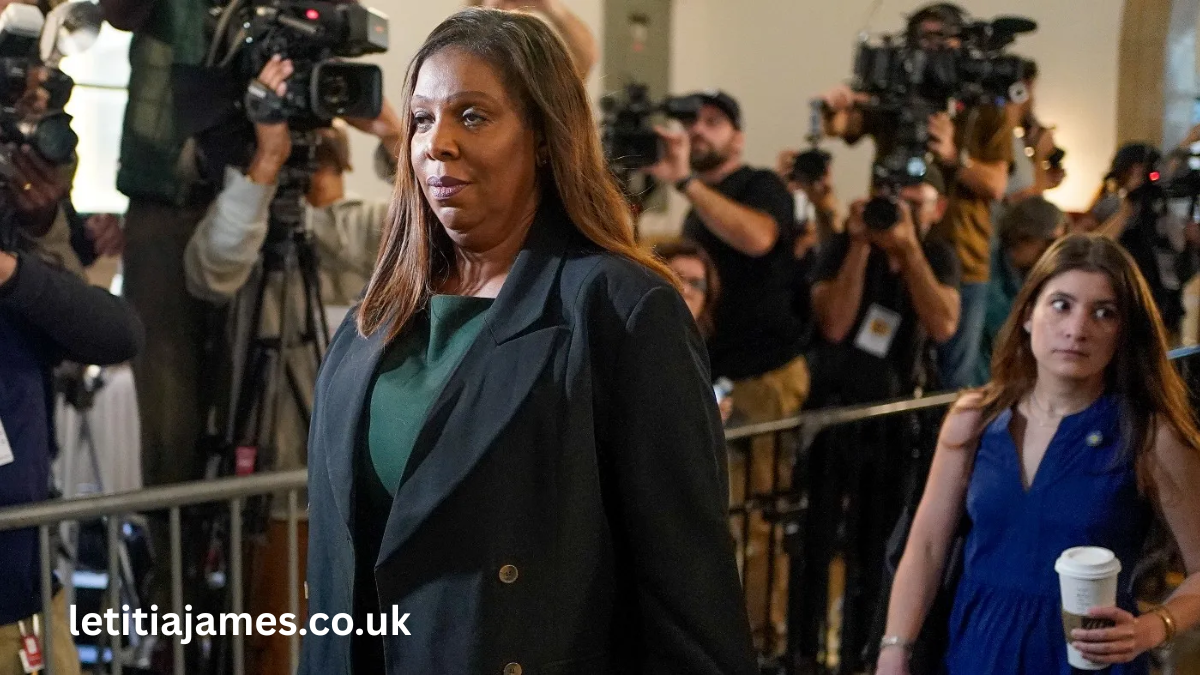
The Letitia James indictment became one of the most closely watched federal cases involving a sitting state attorney general in 2025. The case centred on allegations that Letitia James made false statements connected to a mortgage for a property in Norfolk, Virginia. A federal grand jury returned the indictment on October 9, 2025, charging her with bank fraud and making false statements to a financial institution.
The story, however, did not end with the initial charges. James pleaded not guilty, and her attorneys challenged the legal authority of the prosecutor who brought the case. On November 24, 2025, a federal judge dismissed the indictment without prejudice, finding that interim U.S. Attorney Lindsey Halligan had been unlawfully appointed.
The case subsequently took another turn when the Justice Department attempted to obtain a new indictment. Virginia grand juries declined to indict James again in December 2025. Meanwhile, the government appealed the original dismissal to the U.S. Court of Appeals for the Fourth Circuit.
At the centre of the Letitia James indictment was a three-bedroom property in Norfolk that James purchased in 2020. According to the indictment, the property was financed with a mortgage of approximately $109,600, and James signed documents representing that the home would be used as a secondary residence. Prosecutors alleged that the property was instead rented to a family.
The government alleged that the representation about the property’s use allowed James to obtain mortgage terms that were more favourable than those generally available for an investment property. The indictment claimed that the difference resulted in approximately $18,933 in financial benefit over the life of the loan.
The charges were not simply a dispute over a mortgage form. Prosecutors brought two federal counts: one for bank fraud under 18 U.S.C. § 1344 and another for making false statements to a financial institution under 18 U.S.C. § 1014. An indictment, however, is an accusation rather than a finding of guilt, and James maintained that she had not committed the alleged offences.
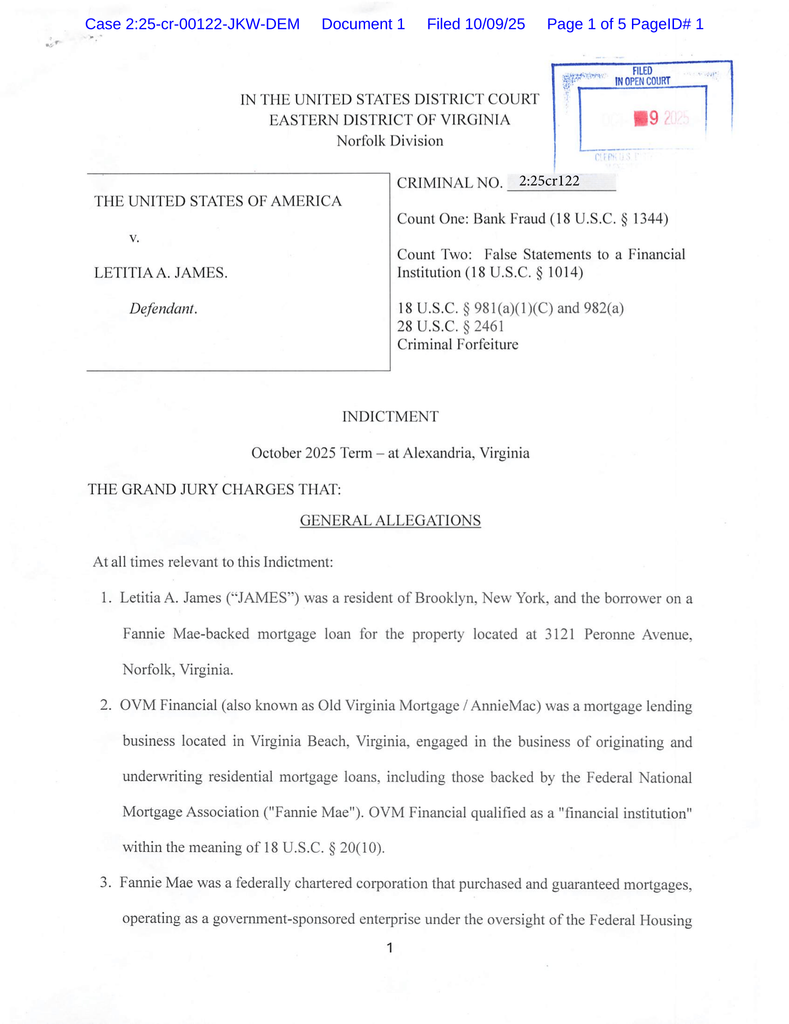
The letitia james indictment attracted unusual attention partly because of James’s highly publicised legal battles with Donald Trump. As New York attorney general, James had pursued a civil fraud case against Trump and his business interests. The timing of the federal prosecution therefore became a major part of public discussion surrounding the case.
James’s defence characterised the prosecution as politically motivated and denied the allegations. Those claims should be distinguished from the legal findings in the case: the federal court’s dismissal was based on the appointment and authority of the prosecutor who presented the indictment, rather than a judicial determination that the underlying mortgage allegations were true or false.
Fact-checking and legal analysis also focused on the underlying mortgage allegations. FactCheck.org reported that legal experts questioned whether the circumstances described in the indictment were ordinarily the type of conduct likely to produce a federal prosecution, while emphasising that the indictment itself alleged specific representations about the property and mortgage terms.
A major development in the letitia james indictment occurred on November 24, 2025. Senior U.S. District Judge Cameron McGowan Currie dismissed the two-count indictment without prejudice. The ruling focused on Lindsey Halligan’s appointment as interim U.S. attorney for the Eastern District of Virginia.
The court concluded that Halligan did not have lawful authority to serve in that position when she presented the case to the grand jury. Because she was the prosecutor responsible for presenting the case, the court determined that her actions in obtaining and signing the indictment could not stand. The dismissal was therefore procedural and constitutional in nature rather than an acquittal following a trial on the mortgage allegations.
The phrase “without prejudice” is important here. It meant the dismissal did not prevent the government from attempting to pursue the allegations again through a legally authorized prosecution, subject to applicable law. That distinction explains why the Justice Department subsequently sought another indictment instead of simply treating the November ruling as the final word on the allegations.
After the original letitia james indictment was dismissed, prosecutors sought another opportunity to present the mortgage allegations to a grand jury. That effort produced a significant development on December 4, 2025, when a Virginia grand jury declined to return a new indictment against James.
A second grand jury also declined to indict her on December 11, according to reporting and case summaries. These decisions were important because they meant that prosecutors did not obtain a replacement indictment after the original case had been dismissed.
At the same time, the Justice Department pursued an appeal of the November dismissal. The government filed its appeal in December 2025, arguing that the lower court had incorrectly determined that Halligan’s appointment prevented the prosecution from proceeding. The appeal was later consolidated with the related case involving former FBI Director James Comey because both cases raised questions concerning Halligan’s appointment.
The letitia james indictment illustrates why legal terminology matters when following major political and criminal cases. Being indicted does not mean that a person has been convicted. A grand jury’s indictment means prosecutors presented enough evidence under the applicable standard for the grand jury to charge the person, while guilt must still be established through the criminal justice process.
The subsequent dismissal also does not mean that a court conducted a trial and found James innocent of the mortgage allegations. The November 2025 dismissal concerned the legal authority of the prosecutor who brought the case. Because the dismissal was without prejudice, the government initially retained the ability to pursue the matter again through lawful procedures.
For readers looking for the latest context, the case therefore needs to be understood as a sequence of events: the October 2025 indictment, James’s not-guilty plea, the November dismissal, unsuccessful attempts to secure another indictment in December, and the government’s appeal. Treating only the original indictment as the complete story leaves out several major legal developments.
The letitia james indictment is no longer an active criminal trial based on the original two-count indictment. The federal district court dismissed that indictment without prejudice in November 2025 after finding Halligan’s appointment unlawful. Two subsequent grand-jury attempts to obtain a new indictment were unsuccessful.
The Justice Department nevertheless appealed the dismissal, meaning the broader legal dispute over the prosecutor’s authority continued beyond the district court’s ruling. As of the latest available case information, the appeal remained an important part of the procedural history rather than evidence that James had been convicted or that the original allegations had been proven at trial.
For anyone researching the story, the most useful approach is to separate allegations, court findings, and political claims. The indictment contained prosecutors’ allegations; James denied wrongdoing; the district court dismissed the case because of the prosecutor’s appointment; and later grand juries declined to return new indictments. Keeping those distinctions clear provides a more accurate understanding of what happened.
What was the Letitia James indictment about?
The letitia james indictment involved allegations concerning a 2020 mortgage for a Norfolk, Virginia, property. Prosecutors charged James with bank fraud and making false statements to a financial institution, alleging that she misrepresented the property’s intended use to obtain more favourable mortgage terms.
Was Letitia James convicted?
No. The original federal case was dismissed without prejudice on November 24, 2025, before a trial on the allegations. Subsequent grand juries also declined to return new indictments against her in December 2025.
Why was the original case dismissed?
The federal judge dismissed the case after determining that Lindsey Halligan, the interim U.S. attorney who presented the indictment, had been unlawfully appointed. The ruling therefore focused on prosecutorial authority and the appointment process rather than deciding the underlying mortgage allegations at trial.
Did prosecutors try to indict James again?
Yes. After the original dismissal, prosecutors sought new indictments. A Virginia grand jury declined to indict James on December 4, 2025, and another grand jury declined on December 11, according to available case reporting.
What is the significance of the case now?
The case remains notable for its combination of federal criminal procedure, questions about interim U.S. attorney appointments, and the broader political context surrounding James and Trump. The original indictment itself should be distinguished from later court rulings and grand-jury decisions when evaluating the full legal history.