 11
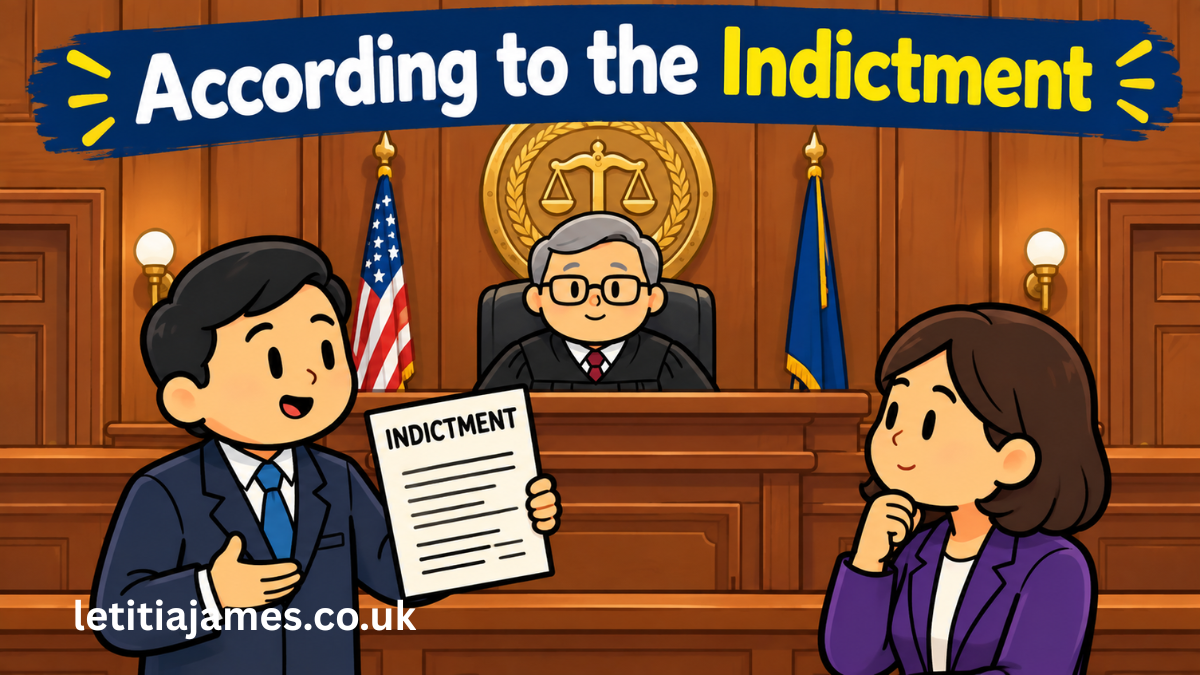
Legal news often contains phrases that sound straightforward but carry significant meaning. One of the most common is according to the indictment. Readers may encounter it in newspaper reports, court documents, government statements, or discussions about high-profile criminal cases. Understanding what this phrase means can make it easier to distinguish between an allegation, evidence, and a fact.
An indictment is a formal charging document used in criminal proceedings. It generally outlines the offences prosecutors believe a defendant committed and provides information about the allegations that will be addressed in court. Importantly, an indictment is not the same thing as a conviction.
When journalists write according to the indictment, they are typically identifying information that comes directly from the charging document rather than presenting the allegations as independently proven facts. That distinction matters because criminal cases can change significantly as evidence is examined and legal arguments are presented.
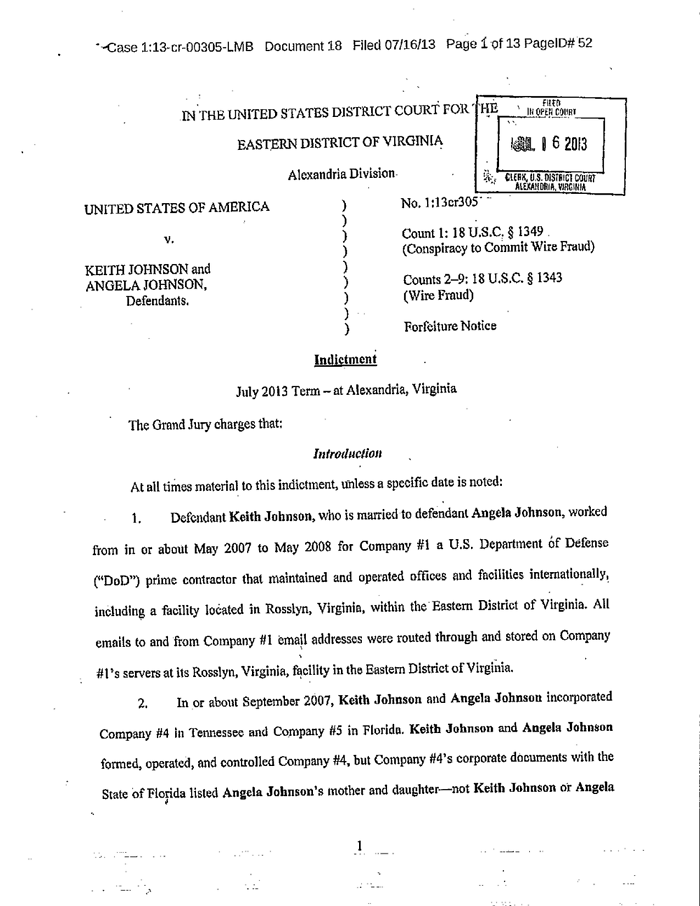
An indictment is a formal accusation that identifies alleged criminal offences. In the United States, federal indictments are generally presented to a grand jury, which determines whether there is probable cause to charge someone with a federal crime. The indictment may describe alleged conduct, relevant dates, transactions, communications, and other circumstances surrounding the charges.
The phrase according to the indictment therefore points readers toward the specific allegations contained within that document. It does not automatically mean that every statement in the indictment has been established as fact. Instead, it explains what prosecutors have formally alleged as part of the criminal case.
For example, an indictment might allege that a defendant participated in a financial scheme involving several transactions. A news report could state that according to the indictment, the defendant allegedly transferred money through particular accounts. At that stage, the allegation remains part of the prosecution’s case and must be addressed through the legal process.
Legal reporting requires careful wording because criminal defendants are generally presumed innocent unless proven guilty according to the applicable legal standard. Reporters therefore need to separate allegations from facts established through evidence or a court ruling.
Using according to the indictment helps create that distinction. It tells readers that the information being described comes from the prosecution’s charging document. This is especially important when an indictment contains detailed accusations that have not yet been tested through a trial.
The wording also provides transparency. Instead of suggesting that a journalist personally verified every allegation, the phrase identifies the source of the claim. Readers can then understand that the information represents what prosecutors have alleged in court documents.
This approach becomes particularly valuable in high-profile cases. Public interest can grow quickly when an indictment involves business executives, elected officials, celebrities, or organisations. Careful attribution helps prevent allegations from being confused with final judicial findings.
An indictment serves several important purposes in a criminal case. It identifies the charges and gives the defendant notice of the accusations they must defend against. Depending on the case, it may contain multiple counts involving different alleged offences or different aspects of the same investigation.
When legal analysts explain that, according to the indictment, prosecutors allege a particular sequence of events, they are describing the government’s theory of the case. Prosecutors may use the document to establish the basic framework for the charges, although the evidence presented later can be much more extensive.
An indictment can also contain allegations concerning other people, companies, transactions, or events. However, being mentioned in an indictment does not necessarily mean that every person named has been charged with a crime. The legal status of each individual must be considered separately.
For that reason, readers should examine the exact wording of the charging document whenever possible. A statement that appears in an indictment may describe an alleged action, an investigative finding, or background information rather than a separate criminal charge.
One of the most important distinctions in criminal law is the difference between being charged and being convicted. An indictment represents formal criminal accusations, while a conviction generally follows a finding of guilt through the applicable legal process.
If a report says, according to the indictment, readers should understand that the information concerns allegations made in the charging document. It should not automatically be interpreted as proof that the defendant committed the alleged offence.
Consider a simple example. Suppose prosecutors accuse an individual of illegally obtaining confidential business information. The indictment might describe when the information was allegedly obtained, how it was allegedly used, and who was allegedly involved. Those details explain the prosecution’s allegations, but they do not by themselves establish guilt.
A trial may introduce documents, testimony, electronic records, financial information, expert analysis, and other evidence. The defence may challenge the government’s interpretation of those materials or present an alternative explanation. The outcome depends on the applicable legal standards and the evidence considered by the court or jury.
Legal documents can be difficult for the average reader because they often contain technical language and detailed descriptions. When according to the indictment appears in a report, readers can use it as a reminder to identify the source and context of the information.
First, look at the specific count being discussed. An indictment may contain several counts, and each one can involve different legal elements. A statement connected to one count should not automatically be treated as an allegation supporting every other charge.
Second, pay attention to words such as “alleged,” “knowingly,” “intentionally,” or “conspired.” These terms can have legal significance. They may describe elements prosecutors must establish or the government’s interpretation of the defendant’s conduct.
Third, distinguish between what prosecutors claim and what the court has actually determined. A later dismissal, plea agreement, acquittal, conviction, or sentencing decision can change the legal status of the allegations described in an earlier indictment.
Finally, consider the date of the document. Criminal cases develop over time, and an initial indictment may not contain everything that later emerges through motions, amended charges, plea agreements, or trial proceedings.
A short quote from an indictment can sometimes create a misleading impression when removed from its surrounding context. An indictment may introduce a detailed allegation, but readers should still examine what prosecutors were required to prove and what the defence argued in response.
For instance, an indictment may describe a series of communications between several individuals. A report might focus on one message because it appears particularly significant. However, the full document could provide additional context about the circumstances, timing, or interpretation of that communication.
The same principle applies to financial allegations. Prosecutors may describe payments, transfers, invoices, or business relationships as part of an alleged scheme. Understanding whether those transactions were themselves illegal or are being presented as evidence of another offence requires careful examination of the actual charges.
In other words, according to the indictment identifies the source of an allegation, but it does not answer every legal question surrounding that allegation. Readers should look at subsequent court proceedings for a more complete picture.
Responsible reporting does more than repeat dramatic allegations. It explains where claims originate, identifies the procedural stage of a case, and avoids presenting accusations as facts before a court has concluded.
Using according to the indictment is one practical way to maintain that distinction. It allows journalists to report what prosecutors have alleged while preserving the important difference between a criminal charge and a final judgment.
Good reporting should also include relevant responses from defence attorneys when those responses are available. A defendant may deny the allegations, challenge the government’s interpretation of events, or argue that the charges do not satisfy the required legal standards.
As a case develops, responsible coverage should be updated. Information from an indictment can be supplemented by court orders, motions, testimony, exhibits, plea agreements, verdicts, and sentencing decisions. Each stage provides additional information that may affect how the original allegations should be understood.
What does “according to the indictment” mean?
The phrase indicates that the information being reported comes from allegations or descriptions contained in a criminal indictment. It identifies the indictment as the source rather than presenting the information as an independently verified fact.
Does an indictment prove that someone committed a crime?
No. An indictment formally charges a person with alleged criminal offences, but it does not itself establish guilt. The allegations must be resolved through the applicable legal process.
Why do journalists use this phrase?
Journalists use it to attribute claims to the charging document and distinguish allegations from proven facts. This is particularly important when reporting on ongoing criminal proceedings.
Can an indictment contain information about uncharged people?
Yes. An indictment can mention individuals who are not themselves defendants. However, being mentioned in a charging document does not necessarily mean that the person is accused of committing a crime.
Where can readers find the full allegations?
Depending on the case, the indictment may be available through a court’s public records system, government announcements, or other official legal sources. Reading the complete document can provide substantially more context than a short news summary.
Understanding legal terminology makes criminal reporting much easier to evaluate. The phrase according to the indictment signals that a particular statement comes from a formal charging document and should be understood within that procedural context.
An indictment can provide important details about the government’s allegations, but it represents only one stage of a criminal proceeding. According to the indictment, prosecutors may describe conduct they believe constitutes a crime, while the defence may later challenge those claims and the court may ultimately reach a different conclusion.
For readers, the safest approach is to distinguish clearly between allegations, evidence, legal arguments, and final judgments. Paying attention to the source and procedural stage of a case helps create a more accurate understanding of what has actually been established.
Ultimately, according to the indictment is more than a common journalistic phrase. It is a useful signal that the information being discussed comes from allegations in a specific legal document. Understanding that distinction allows readers to follow complex criminal cases with greater clarity and avoid confusing an accusation with a proven fact.