
 11
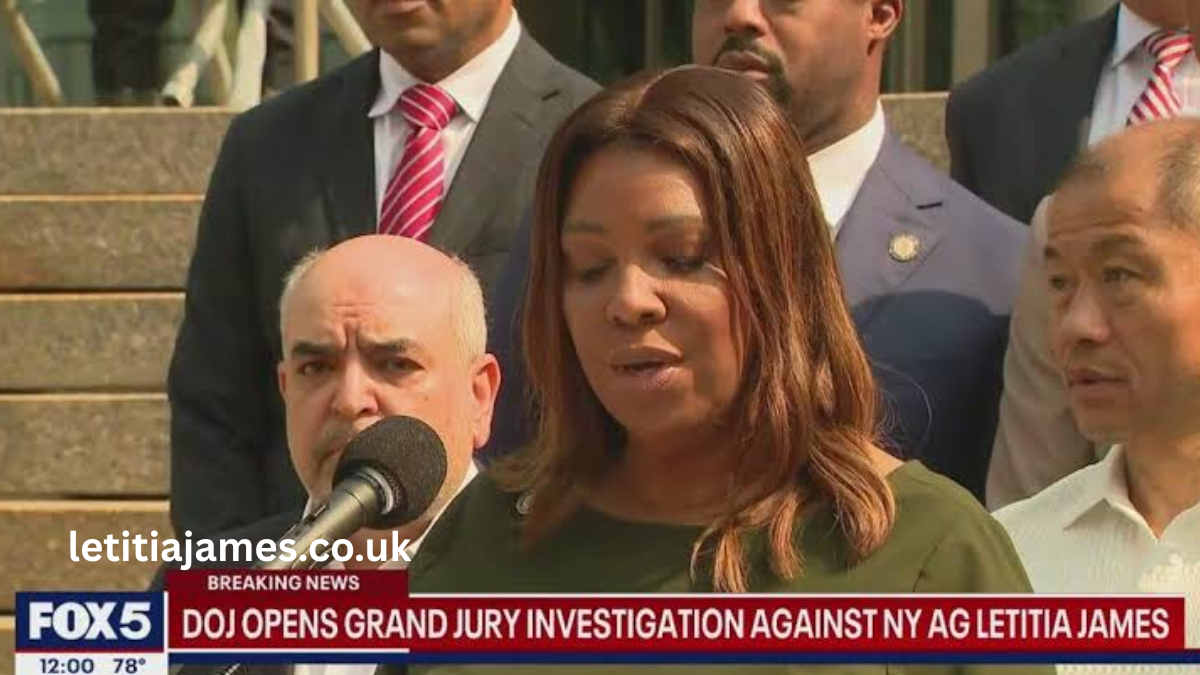
The Letitia James grand jury proceedings became one of the most closely watched federal legal stories involving a sitting state attorney general. The case centred on allegations concerning a Virginia property and mortgage documents, while later court proceedings focused heavily on whether the prosecutor who obtained the original indictment had been lawfully appointed.
Because the case has developed through several stages, it is important to distinguish between an indictment, a dismissal, later grand-jury decisions, and the ongoing appeal. An indictment itself is an accusation, not a finding of guilt. The U.S. Department of Justice’s original announcement also explicitly stated that James was presumed innocent unless proven guilty.
As of September 2026, the legal story is still relevant because the government has appealed the dismissal of the original criminal case. On September 15, 2026, the Fourth Circuit heard arguments over whether the appointment of the prosecutor who brought the case was legally valid.
The origins of the Letitia James grand jury investigation trace back to questions surrounding a Virginia property and the mortgage associated with it. Federal investigators examined whether information connected to the property had been inaccurately represented to a financial institution.
In October 2025, a federal grand jury returned an indictment charging James with bank fraud and making false statements to a financial institution. According to the Justice Department, the allegations concerned a mortgage transaction involving a property in Norfolk, Virginia. The indictment included one count under the federal bank-fraud statute and another concerning false statements to a financial institution.
The prosecution alleged that James had received more favourable mortgage terms by making inaccurate representations concerning the property. Reporting at the time said the case involved a house purchased in 2020 and allegations concerning a “second home rider” attached to the mortgage. James denied wrongdoing and pleaded not guilty.
The case attracted significant attention partly because James had previously pursued major civil litigation against Donald Trump. That political background led James and her lawyers to characterise the prosecution as retaliatory, while federal prosecutors presented the allegations as an ordinary criminal matter. Those competing interpretations should be kept separate from the underlying procedural facts.
A Letitia James grand jury indictment did not establish that she had committed a crime. In the federal system, a Letitia James Grand Jury determines whether there is sufficient basis to formally charge someone, while a criminal trial requires prosecutors to prove the charged offences beyond a reasonable doubt.
That distinction matters because grand-jury proceedings are different from a trial. Grand jurors hear evidence presented by prosecutors and decide whether an indictment should be returned. They do not determine a defendant’s ultimate guilt or innocence in the same way a trial jury does.
The October 2025 indictment therefore represented the beginning of a criminal prosecution rather than its conclusion. James remained entitled to the presumption of innocence throughout the proceedings. The Justice Department’s own announcement emphasised that an indictment is merely an accusation.
The allegations themselves also became a subject of dispute. Reporting later indicated that evidence available to investigators did not necessarily support every allegation in the indictment as strongly as the prosecution initially suggested. ABC News reported that investigators had information from James’s family member that raised questions about claims concerning rental income and the property’s use.
The next major development in the Letitia James grand jury story involved the prosecutor rather than the underlying mortgage allegations. In November 2025, U.S. District Judge Cameron McGowan Currie dismissed the criminal case after determining that Lindsey Halligan, who had secured the indictment, had been unlawfully appointed as interim U.S. attorney for the Eastern District of Virginia.
That ruling was significant because the court’s reasoning concerned the government’s legal authority to bring the prosecution. In other words, the dismissal did not amount to a trial verdict concerning whether James committed bank fraud.
The dismissal was also without prejudice, leaving the government with the possibility of attempting to bring the charges again through a legally authorised prosecutor. That possibility quickly became important because federal prosecutors subsequently returned to grand juries seeking another indictment.
For readers following the case, this distinction prevents a common misunderstanding: the original indictment was not simply “proven false” or “proven true” by the dismissal. The judge’s ruling focused on the authority and appointment of the prosecutor who brought the case.
The Letitia James grand jury story took another unexpected turn in December 2025. After the original case was dismissed, a federal grand jury in Virginia declined to return a new indictment against James.
The Washington Post reported that prosecutors sought another indictment after the earlier dismissal, but the Letitia James Grand Jury declined to charge her again. The report noted that grand juries generally require only a probable-cause standard for an indictment, which is considerably lower than the beyond-a-reasonable-doubt standard required for conviction at trial.
A second grand jury subsequently declined to indict James as well, according to ABC News reporting from December 2025. The decision came after prosecutors attempted to revive the mortgage-related case following the dismissal of the original prosecution.
These developments are important but should not be overstated. A grand jury’s decision not to indict is not equivalent to a judicial declaration that no wrongdoing occurred. Likewise, the earlier indictment did not establish guilt. Each procedural stage has a different legal meaning.
The Letitia James grand jury controversy did not completely disappear after the later grand-jury decisions. The Justice Department appealed the district court’s dismissal of the original case, bringing the appointment issue before the U.S. Court of Appeals for the Fourth Circuit.
On September 15, 2026, a three-judge appellate panel heard arguments concerning whether the Justice Department had lawful authority to appoint Halligan as interim U.S. attorney. Reuters reported that the judges questioned the government’s position during oral arguments.
As of September 22, 2026, the Fourth Circuit had not yet issued its decision. The appellate proceedings therefore remain separate from the earlier grand-jury decisions. The immediate legal question before the appeals court concerns the validity of the appointment and the resulting prosecution, rather than simply asking whether the mortgage allegations were true.
There has also been a separate federal investigation involving James’s work as New York attorney general. In August 2026, the Second Circuit upheld a ruling blocking Justice Department subpoenas directed at her office in connection with an investigation into certain civil litigation. Reuters reported that no charges had been filed in that separate matter.
The Letitia James grand jury proceedings illustrate how complicated federal criminal cases can become when questions about evidence, prosecutorial authority, and constitutional appointment rules overlap.
For the public, one of the most useful lessons is to separate headlines from legal outcomes. “Indicted,” “dismissed,” “declined to indict,” and “appealed” describe very different events. Treating them as interchangeable can create a misleading picture of what actually happened.
The case also demonstrates why the status of a prosecution can change significantly after an indictment. A defendant may face charges, challenge the government’s authority, obtain dismissal, and then confront additional prosecutorial efforts. None of those events alone determines the ultimate factual merits of every allegation.
For now, the legal record contains several distinct developments: the 2025 indictment, the dismissal based on the prosecutor’s appointment, subsequent grand-jury refusals to reindict, and the government’s pending appeal. Keeping those stages separate provides a clearer understanding of where the matter stands.
What was the Letitia James grand jury investigating?
The original federal case involved allegations concerning a Virginia property and mortgage documents. Prosecutors charged James with bank fraud and making false statements to a financial institution.
Was Letitia James convicted of the charges?
No. The original prosecution was dismissed, and subsequent grand juries declined to return new indictments in the mortgage-related case. The government later appealed the dismissal, and that appeal was still pending as of September 22, 2026.
Why was the original indictment dismissed?
A federal judge ruled that Lindsey Halligan, the prosecutor who obtained the indictment, had been unlawfully appointed as interim U.S. attorney. The dismissal therefore focused on prosecutorial authority and appointment law.
Did a grand jury later reject charges against James?
Yes. Federal grand juries declined to reindict James after the original case was dismissed. ABC News reported that a second grand jury also declined to indict her in December 2025.
What is the latest status of the case?
As of September 2026, the Justice Department’s appeal is pending before the Fourth Circuit. The court heard oral arguments on September 15 concerning the legality of Halligan’s appointment, and no appellate decision had been issued by September 22.
Overall, the Letitia James grand jury case remains a developing legal story rather than a completed criminal judgment. The most reliable way to follow it is to distinguish the original allegations from the procedural rulings and the still-pending appellate proceedings.